When you click the link, it will take you to the corresponding page.
12周年記念スペシャルコース
キムチ3種盛り
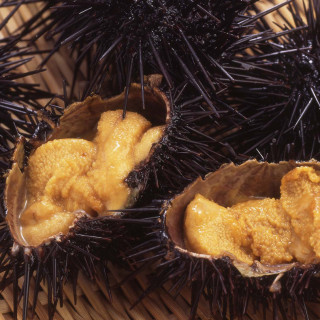
生ウニのフラン
It is commonly referred to as the 'sex gland', but accurately speaking; it is not the roe of sea urchins but rather the edible portion of their reproductive organs (ovaries, testes). In Japanese, it is also familiarly known as 'uni,' and three different Chinese characters are used for 'uni' (although the pronunciation is the same). The first is '海栗', a shape covered with spines like a chestnut. It is derived from the shape of live sea urchins resembling unopened chestnuts. It mainly refers to sea urchins in their unopened state. The second one is '海胆' (haidan), which got its name because the edible part of sea urchins resembles internal organs (such as the liver). The character '胆' can also be pronounced as 'i,' and 'Umii' (Umi海Sea+I胆gallbladder) evolved into 'uni.' It refers to the state where the shell is removed, and only the reproductive organs of sea urchins are extracted, which is the most common yellow sea urchin we see. Generally, this character is widely used. The last is '雲丹' (undan), which means red clouds. It is a Chinese character used to describe the shape of sea urchins processed into salt or alcoholic food products. In Korea and Japan, common edible varieties of sea urchins include purple uni (紫海胆, Murasaki uni), round sea urchin (北紫海胆, Kita Murasaki uni), horse dung sea urchin (馬糞海胆, bahun uni), Ezo horse-dung sea urchin (蝦夷馬糞海胆, ezobahun uni), and pink sea urchin (赤海胆, akahuni).
日本一美味しいKintanトリプルユッケ (サーロイン & イチボ & ランプ)
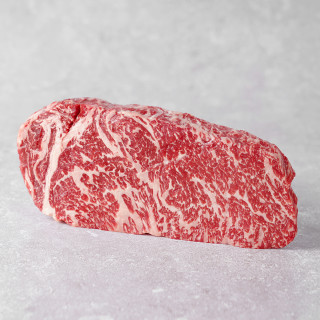
The sirloin is one of the most popular cuts of beef. It is located in the back of the loin and is characterized by its moderate fat and tenderness. The sirloin is part of the "short loin" and lies between the ribeye and the tenderloin. This cut is especially delicious as a steak, offering a juicy and flavorful taste. There are several theories about the origin of the name "sirloin." One of them is that King Charles II of England named this cut "Sir Loin." Whether this story is true or not is uncertain, but the name "sirloin" has since become widespread. Sirloin is used in various dishes, including grilled meat, steaks, and roast beef. It is particularly popular as a steak, and when cooked properly, its umami can be maximized. To enjoy the texture and flavor of the meat, it is often simply seasoned with salt and pepper. The sirloin is an indispensable cut of beef used in everything from home cooking to high-end restaurants.
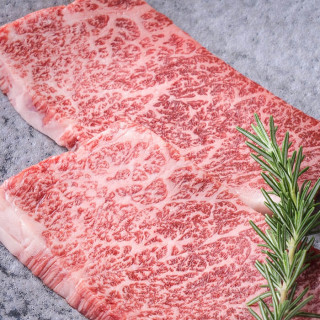
Ichibo, known in English as the "Top Sirloin Cap" or "Coulotte," is a highly prized cut of beef from the sirloin primal, specifically from the top part of the sirloin butt. This cut is renowned for its rich flavor, tenderness, and versatility in various culinary applications. Characteristics Ichibo is a triangular-shaped muscle covered by a thick layer of fat on one side, which enhances the meat’s flavor and helps keep it moist during cooking. The meat itself is moderately marbled, offering a perfect balance between lean meat and fat, making it both flavorful and juicy. Flavor and Texture The cut is celebrated for its robust, beefy flavor and tender, juicy texture. The fat cap not only adds depth to the taste but also renders beautifully when cooked, providing a crispy exterior while maintaining a tender interior. This balance makes Ichibo a favorite for grilling, roasting, and pan-searing. Cooking Methods Grilling is one of the most popular methods for preparing Ichibo, particularly in Brazilian barbecue (churrasco). It is often skewered, seasoned simply with coarse salt, and grilled over an open flame, allowing the fat to render and baste the meat, creating a deliciously charred crust. Additionally, it can be roasted whole, cut into steaks, or sliced thin for stir-frying. When roasting, cooking with the fat side up is advisable to allow the fat to melt into the meat, enhancing its flavor and juiciness. Versatility Ichibo's versatility extends beyond traditional barbecue. It can be marinated, cooked sous-vide, or used in stews and braises, making it a standout ingredient in various cuisines. Its rich flavor and tender texture make it a favorite among chefs and home cooks alike, providing a delectable eating experience.
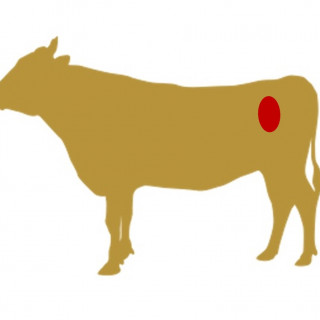
The rump is located around the lower back and buttocks of the cow, characterized by tender, lean meat. Only about 4–5 kg can be obtained from one cow, making it a rare cut. It is low in fat and healthy, with concentrated flavor. Commonly used in steak, roast beef, and tataki. It is also suitable for thin slices in dishes like shabu-shabu or barbecue.
プラチナタン
新・30日間熟成Kintan
玉締めしぼり胡麻油とサラノバレタスのチョレギサラダ
神戸牛赤身のすだれステーキ
氷結冷麺
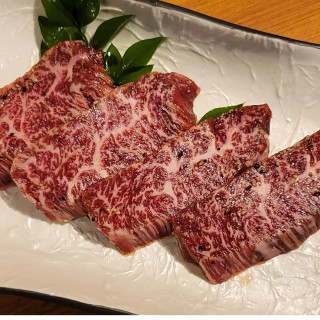
とろける極上ロース
飛騨の牛ハラミ
The outside skirt, known as ハラミ (harami) in Japanese, is a beef cut taken from the diaphragm muscle of the cow. It is a long, flat piece of meat, known for its rich flavor and tenderness. The outside skirt is located near the cow's belly, specifically between the chest and the abdominal muscles. This cut is favored for its marbling and the intense beefy taste it provides. It's often used in grilling and barbecuing due to its ability to retain flavor and moisture when cooked over high heat. Popular dishes include fajitas, Korean bulgogi, and Japanese yakiniku.
秘伝ユッケジャンスープ
フォアグラとトリュフの石焼ピビンパ
さっぱりフルーツポンチ